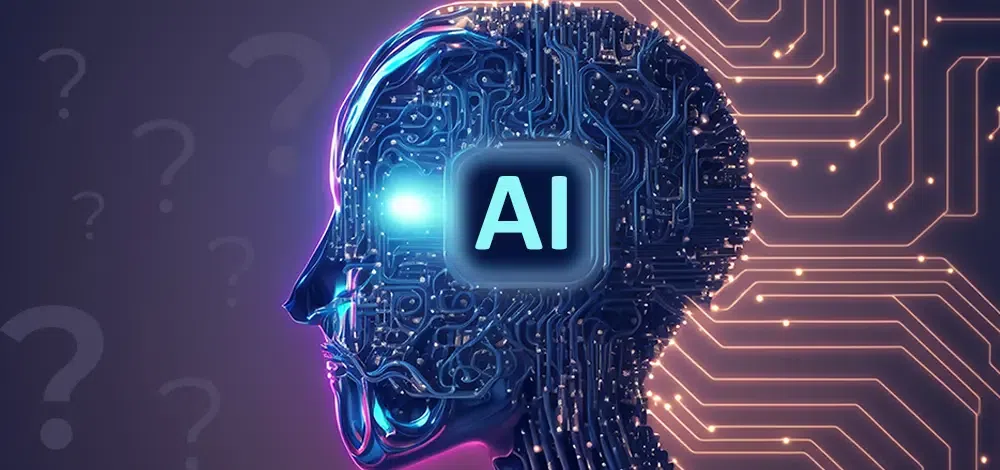

Artificial Intelligence, commonly known as AI, is no longer a concept confined to science fiction. Over the past few decades, AI has evolved from theoretical ideas into practical technologies that influence nearly every aspect of human life. From healthcare to finance, transportation to entertainment, AI is reshaping how we live, work, and interact with the world.
What is Artificial Intelligence?

At its core, Artificial Intelligence refers to the simulation of human intelligence in machines that are programmed to think, learn, and make decisions. Unlike traditional software that follows fixed rules, AI systems can analyze data, recognize patterns, and adapt to new information. This ability to mimic cognitive functions such as problem-solving, reasoning, and decision-making makes AI an extraordinary technological advancement.
AI can be broadly categorized into two types:
- Narrow AI (Weak AI):
Narrow AI is designed to perform specific tasks. Examples include voice assistants, recommendation systems, and autonomous vehicles. These systems excel in their specialized domain but cannot generalize knowledge outside their programmed function. - General AI (Strong AI):
General AI aims to replicate human cognitive abilities, enabling machines to perform any intellectual task that a human can do. While this remains largely theoretical, research in this area continues to grow.
How AI Works
AI systems operate through a combination of algorithms, data, and computational power. The core components include:
- Machine Learning (ML):
Machine learning is a subset of AI that enables machines to learn from data and improve performance without explicit programming. By analyzing historical data, ML models can identify patterns and make predictions. For instance, ML powers email spam filters, fraud detection systems, and personalized recommendations on streaming platforms. - Deep Learning:
Deep learning is a more advanced form of machine learning that uses artificial neural networks, inspired by the human brain. These networks excel in processing complex data such as images, audio, and text. Applications include facial recognition, natural language processing, and autonomous driving. - Natural Language Processing (NLP):
NLP allows machines to understand, interpret, and respond to human language. This technology underpins chatbots, virtual assistants, and language translation systems, making human-computer interactions smoother and more intuitive. - Computer Vision:
Computer vision enables machines to interpret visual information from the world. From self-driving cars recognizing obstacles to medical AI analyzing X-rays, computer vision transforms how machines perceive and interact with their environment.
Applications of AI
AI’s applications are vast and continuously expanding. Here are some of the most impactful areas:
1. Healthcare
AI is revolutionizing healthcare by improving diagnostics, treatment planning, and patient care. AI algorithms can analyze medical images, detect diseases at early stages, and predict patient outcomes. Virtual health assistants provide personalized advice, while robotic surgery systems enhance precision in complex operations.
2. Education
In education, AI personalizes learning experiences for students. Adaptive learning platforms adjust content based on individual progress, strengths, and weaknesses. AI also automates administrative tasks, allowing educators to focus more on teaching and mentoring.
3. Finance
The financial sector benefits from AI in fraud detection, algorithmic trading, risk assessment, and customer service. AI can analyze massive datasets to identify suspicious transactions, predict market trends, and offer personalized investment recommendations.
4. Transportation
AI drives innovation in transportation through autonomous vehicles, traffic management, and predictive maintenance. Self-driving cars rely on AI for navigation, obstacle detection, and decision-making. Public transportation systems use AI to optimize routes and reduce congestion.
5. Entertainment
AI enhances entertainment experiences by recommending content, generating music, and even creating art. Streaming platforms use AI to suggest movies or shows based on user preferences, while AI-powered video games offer more dynamic and responsive gameplay.
6. Manufacturing
In manufacturing, AI optimizes production processes, improves quality control, and reduces operational costs. Predictive maintenance powered by AI prevents machinery breakdowns, while robotic automation increases efficiency and safety.
7. Agriculture
AI supports modern agriculture through precision farming, crop monitoring, and yield prediction. AI systems analyze soil conditions, weather patterns, and plant health to help farmers make data-driven decisions, increasing productivity and sustainability.
Benefits of AI
AI offers numerous benefits that drive economic growth, efficiency, and innovation:
- Automation of Repetitive Tasks: AI can handle mundane and repetitive tasks, freeing human workers for creative and strategic activities.
- Enhanced Decision-Making: AI systems provide data-driven insights that improve decision-making in various industries.
- Cost Reduction: By optimizing processes and predicting outcomes, AI reduces operational costs.
- Personalization: AI delivers tailored experiences in education, healthcare, marketing, and entertainment.
- Innovation: AI fosters the development of new products, services, and business models.
Challenges and Ethical Considerations
Despite its advantages, AI poses significant challenges:
- Job Displacement: Automation may replace certain jobs, requiring reskilling and adaptation for the workforce.
- Bias and Fairness: AI algorithms can inherit biases present in training data, leading to unfair outcomes.
- Privacy Concerns: The collection and analysis of personal data raise concerns about privacy and security.
- Control and Accountability: Determining responsibility when AI systems make errors or cause harm is complex.
- Existential Risks: The development of highly autonomous AI systems raises philosophical and ethical questions about the future of humanity.
The Future of AI
The future of AI is both promising and uncertain. Advances in quantum computing, neural networks, and cognitive computing may accelerate AI’s capabilities, bringing us closer to achieving general AI. Collaboration between governments, researchers, and industry leaders is crucial to ensure AI is developed responsibly, ethically, and safely.
Emerging trends include:
- AI in Climate Change: AI can model environmental changes, optimize energy use, and support sustainable practices.
- AI in Creativity: Generative AI is creating art, literature, and music, challenging the boundaries of human creativity.
- Human-AI Collaboration: AI will increasingly augment human abilities rather than replace them, fostering enhanced productivity and problem-solving.
- Explainable AI (XAI): Research is focusing on making AI decisions more transparent and understandable to humans, promoting trust and accountability.
Conclusion
Artificial Intelligence is more than just a technological trend; it is a transformative force reshaping society, economy, and daily life. Its ability to learn, adapt, and perform complex tasks has unlocked unprecedented possibilities in every sector. However, with great power comes great responsibility. Ethical considerations, societal impact, and responsible governance must guide AI development to ensure it benefits humanity as a whole.
As AI continues to evolve, it promises a future where intelligent machines collaborate with humans to solve the world’s most pressing challenges, opening doors to a smarter, more efficient, and more innovative world.